
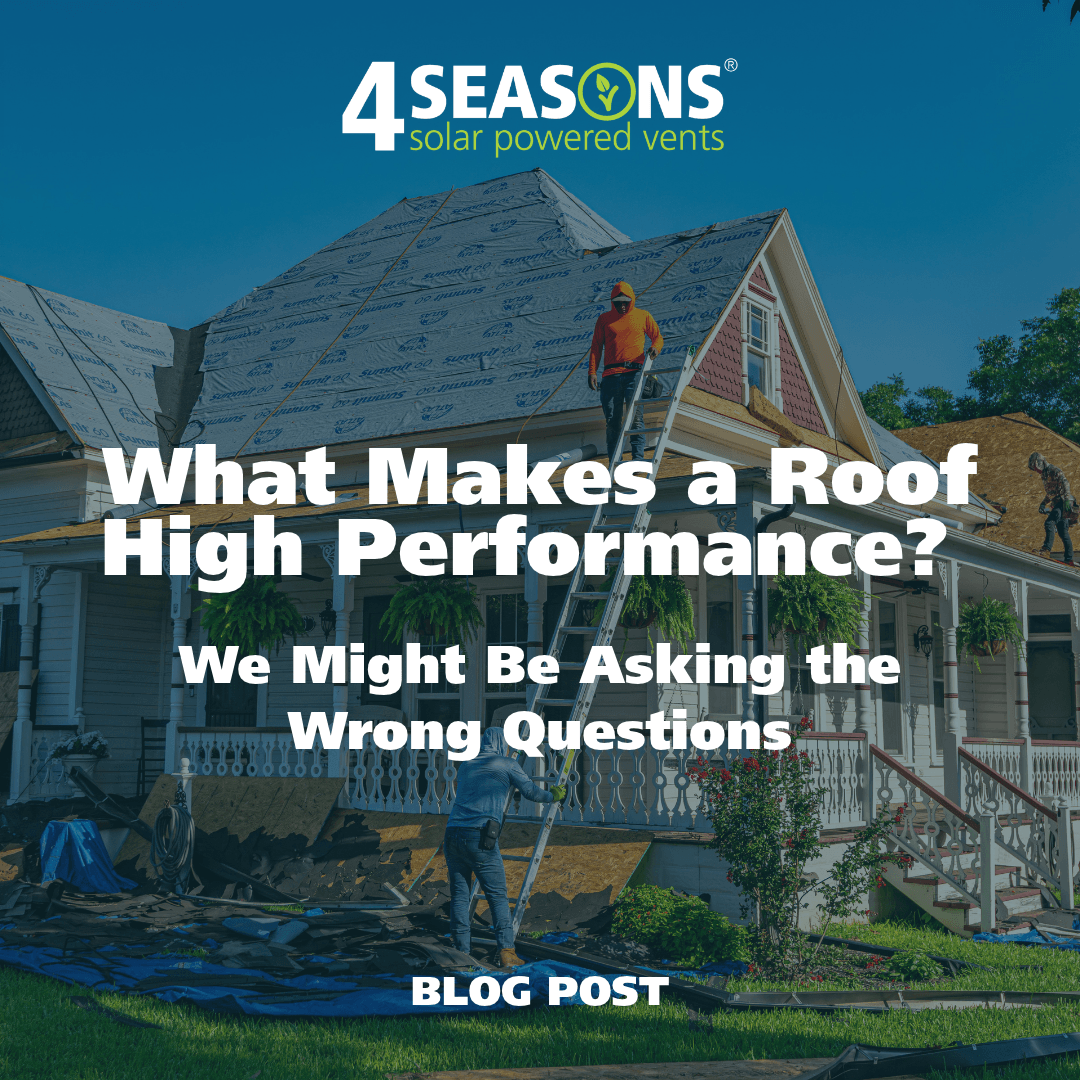
The roofing industry has spent decades improving the materials we put on top of buildings. But are we paying enough attention to what’s happening underneath them?
When we talk about a high performance roof, the conversation usually starts with familiar benchmarks: shingle durability, wind resistance, waterproofing, energy efficiency and warranty coverage.
These are important measures of quality. They’re also only part of the story.
A roof can be built with premium materials, installed by an experienced crew and look flawless from the street. But if the attic beneath it isn’t managing heat and moisture effectively, the roofing system may not be performing to its full potential.
As roofing technology evolves, it’s worth asking whether our definition of performance needs to evolve with it.
A High Performance Roof Is More Than the Sum of Its Materials
For years, roofing innovation has focused heavily on the visible components of a roof. Manufacturers have developed more durable shingles, advanced membranes, improved underlayments and increasingly sophisticated weather protection systems.
And those advancements matter.
But a roofing system doesn’t operate in isolation. Every component influences how the structure responds to changing temperatures, moisture and environmental conditions.
Consider attic ventilation.
In a properly designed system, ventilation helps remove excess heat and moisture from the attic space. Working alongside adequate insulation and air sealing, it can help reduce conditions that contribute to condensation, moisture damage and unnecessary heat buildup.
Yet ventilation is sometimes treated as a secondary consideration rather than an essential part of roof performance.
If we’re serious about building better roofs, shouldn’t we be evaluating how the entire system functions together?
Are We Measuring Performance or Just Product Quality?
There’s an important distinction between a high quality roofing product and a high performing roofing system.
A shingle may meet rigorous durability standards. An underlayment may provide excellent water resistance. A roof vent may be engineered for efficient airflow.
But the performance of the finished roof depends on how these components are selected, installed and integrated.
For example, the effectiveness of an attic ventilation system isn’t determined by the presence of a vent alone.
It depends on several factors, including:
- Airflow balance: Whether intake and exhaust ventilation are appropriately designed to work together.
- Ventilation capacity: Whether the system provides sufficient airflow for the attic’s size and configuration.
- Air sealing and insulation: How effectively the home limits unwanted heat and moisture movement into the attic.
- Environmental conditions: How the system responds to seasonal temperatures, humidity and changing weather.
- Installation quality: Whether products are correctly positioned and installed according to their specifications.
These factors can significantly influence the results a homeowner experiences.
A high performance roof should be evaluated as a complete system, not simply a collection of individually impressive products.
The Metrics Worth Paying More Attention To
If we’re going to rethink roofing performance, we need to look beyond what a product promises and consider what the system actually delivers.
For ventilation, that means asking more specific questions.
How effectively is excess heat being removed from the attic? Is moisture being managed throughout the year? Does the ventilation strategy account for the building’s design and climate? Is the system functioning as intended after installation?
And perhaps most importantly, how do we know?
These questions open the door to a more informed approach to roofing.
Temperature and humidity monitoring, airflow calculations and ventilation assessments can provide valuable information about attic conditions and system design.
Not every roofing project requires sophisticated monitoring technology. But understanding what contributes to performance allows contractors to make more informed recommendations and helps homeowners understand the value of the work being done.
It also creates opportunities for manufacturers to develop products that address measurable challenges rather than simply adding new features.
Where Innovation Has an Opportunity to Make a Difference
The roofing industry is no stranger to innovation.
We’ve seen meaningful advances in materials, manufacturing, installation techniques and energy conscious building practices.
Now there’s an opportunity to apply that same thinking to ventilation.
Solar powered attic ventilation is one example.
By using solar energy to power mechanical airflow, these systems offer an alternative to electrically powered attic exhaust fans. When properly specified and integrated with adequate intake ventilation, they can support the movement of hot attic air without drawing electricity from the home for fan operation during solar powered use.
But the opportunity extends beyond the power source.
Thoughtful product engineering can also address installation efficiency, weather resistance, material durability and compatibility with different roofing applications.
At 4 Seasons Solar Powered Vents, these considerations are central to how we approach ventilation technology.
Our focus is on developing practical solutions that support attic performance while respecting the needs of the roofing professionals responsible for installing them.
It’s an approach that recognizes innovation isn’t simply about introducing something new.
It’s about identifying where existing systems can work better and engineering products that help make that possible.
The Roofer’s Role Is Evolving, Too
As homeowners become more informed about energy efficiency, building performance and long term maintenance, roofing professionals have an opportunity to lead a more comprehensive conversation.
Instead of discussing only which shingles to install or how long a warranty lasts, contractors can help customers understand how their roofing system manages heat, moisture and ventilation.
That requires knowledge, thoughtful product selection and a willingness to look beyond the most visible parts of the job.
It also gives contractors an opportunity to distinguish themselves through expertise.
A homeowner may not immediately recognize the importance of attic airflow, but a contractor who can explain how ventilation contributes to the overall roofing system brings valuable insight to the project.
And as building technologies continue to advance, that knowledge will become increasingly relevant.
Maybe It’s Time to Change the Questions
What if the next conversation about roofing performance started somewhere different?
Not just, “How long will these shingles last?”
But, “How well will this entire roofing system perform?”
Not just, “What materials are we installing?”
But, “How are those materials working together?”
And not simply, “What’s new in roofing?”
But, “What’s making roofing better?”
These are the questions that encourage better design, more informed decisions and meaningful innovation.
The future of roofing performance won’t be defined by one product or technology. It will be shaped by professionals and manufacturers who recognize that every component has a role in building a better roof.
At 4 Seasons Solar Powered Vents, we’re proud to be part of that progress.
We’re working with roofing professionals to bring thoughtfully engineered solar powered ventilation solutions to rooftops across North America. Explore our solar powered ventilation solutions, learn about our technology and discover how you can help move the roofing industry forward.